Why Lab Diamonds Cost Less And Why That's Good for Buyers
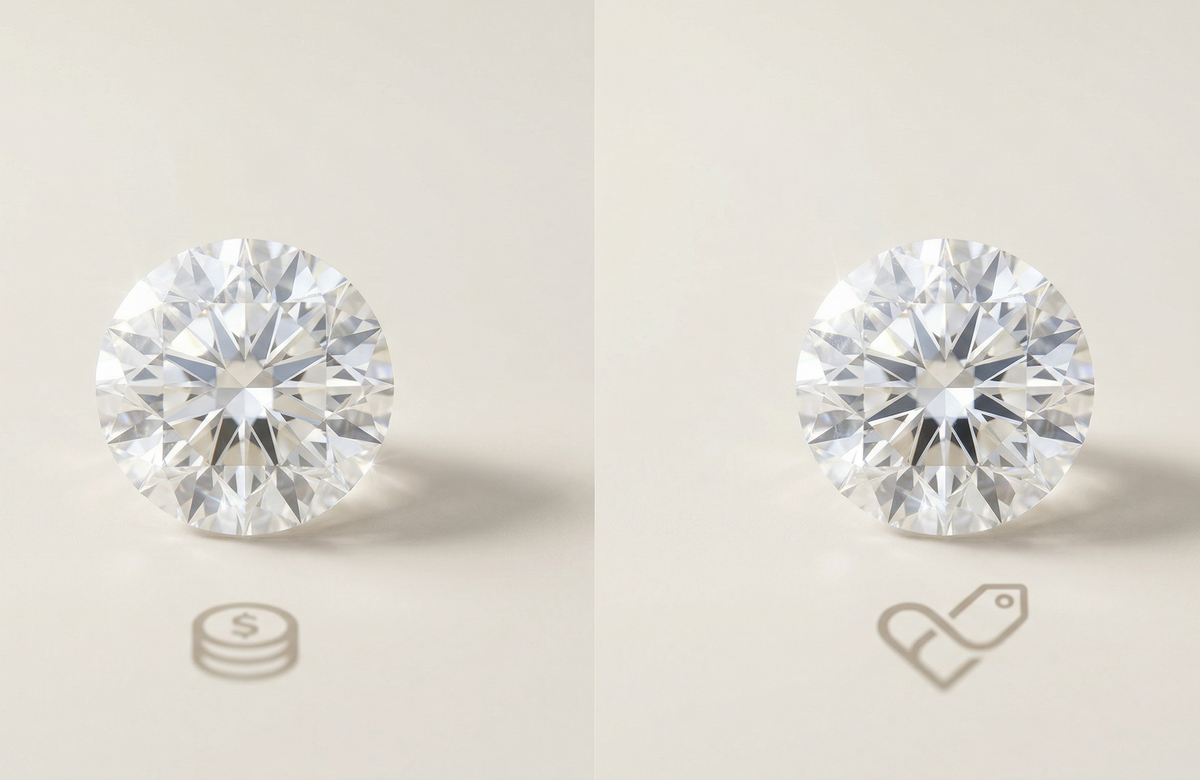
When people first hear that lab-grown diamonds cost 70–85% less than natural diamonds of similar quality, the first reaction is often suspicion. Something must be inferior, right? No. And understanding why they cost less should actually make you more confident in them.
Natural diamond pricing: the scarcity premium
Natural diamond prices are driven partly by genuine scarcity and partly by carefully managed supply and decades of marketing. Add the cost of mining operations, global logistics and several layers of distribution, and every natural diamond passes through many hands before it reaches a store, each adding a margin.
Lab-grown pricing: production reality
Lab-grown diamonds are produced in specialised facilities. The equipment is expensive to set up, but once running, the cost of each additional diamond keeps falling. Growth times have shortened, yields have improved and the industry has scaled. Those savings are passed on to buyers.
No mining overhead
Natural diamond prices carry the cost of massive mining operations: heavy machinery, remote workforces, safety systems, regulation, environmental mitigation and moving millions of tonnes of earth to find a few gem-quality stones. Lab-grown diamonds need none of that.
Lower cost doesn't mean lower quality
The lower price reflects lower production and distribution costs, not lower quality. Here's a real example: at SIYARI, a one-carat lab-grown diamond ring with an E colour, VVS clarity, IGI-certified stone starts from ₹24,999. A natural one-carat diamond of lower grade can cost ₹3 lakh or more. Same hardness, same chemistry, same brilliance. The extra lakhs buy geological age and mining overhead, not a better diamond.
What the price gap means for you
Instead of a half-carat natural solitaire, you can choose a much larger lab-grown diamond. Instead of one piece, you can build a matched set. Instead of compromising on colour or clarity, you can choose the top grades. See exactly what each budget buys in our carat-wise price guide.
The bottom line
Lab-grown diamonds cost less because of economics, not inferiority. For Indian buyers who've always understood value, that's not a compromise. It's simply a better deal.
Want to see for yourself? Book a visit to our studio in Somajiguda, Hyderabad, or read the economics of lab diamonds.