How Lab-Grown Diamonds Are Made: Inside the Science
It's still a little mind-bending: one of the most prized materials in history can now be grown in a lab in a matter of weeks. But how does it actually work, and why does it matter for the diamond you wear? Here's a look inside the two methods used to grow diamonds: CVD and HPHT.
It starts with a diamond seed
Both methods begin with a diamond seed, a very thin slice of an existing diamond. The new diamond grows on top of it. Because the seed is real diamond, the new crystal follows the same carbon lattice, so the result is a genuine diamond, not some other form of carbon.
Method 1: CVD (chemical vapour deposition)
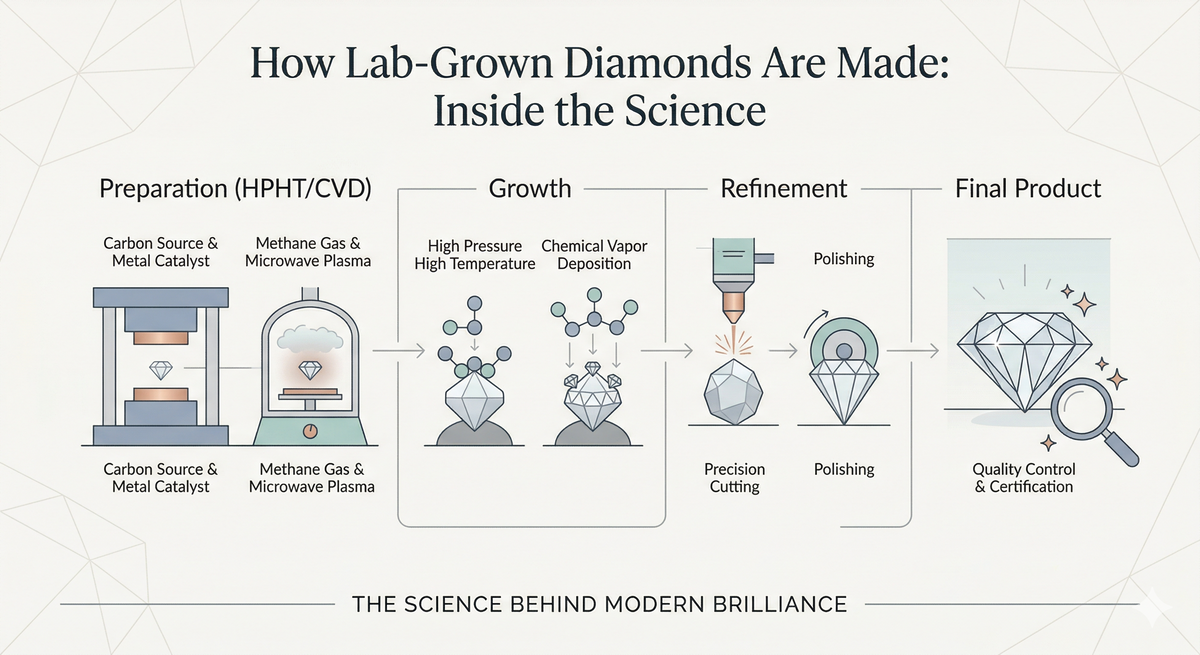
The seed is placed in a vacuum chamber filled with carbon-rich gases, usually methane and hydrogen, at low pressure. Microwave energy turns the gas into plasma. Carbon atoms break away and settle on the seed, building the crystal up layer by layer over several weeks.
CVD diamonds are known for their purity and can reach very high colour grades, which is why CVD is the preferred method for gem-quality stones. Every SIYARI diamond is a CVD-grown diamond.
Method 2: HPHT (high pressure, high temperature)
HPHT is the older method and more closely mimics conditions deep underground. A seed and a carbon source are placed in a press and subjected to pressures of up to 1.5 million pounds per square inch and temperatures above 1,400°C. The carbon melts and crystallises around the seed over days to weeks.
HPHT diamonds can show slightly different growth patterns under magnification, which gemmologists use, along with advanced equipment, to identify their origin.
Cutting, polishing and certification
Once grown, rough lab diamonds are cut and polished exactly like mined diamonds, with the same precision. A badly cut lab diamond is just as dull as a badly cut mined one, so cut quality matters as much as ever.
Finished stones go to labs such as IGI or GIA for grading. Each gets a report covering cut, colour, clarity and carat, and a laser inscription on the girdle identifying it as lab-grown.
Why the science matters
Understanding how lab-grown diamonds are made clears up the idea that they're fake or inferior. The processes are advanced, energy-intensive and produce real diamonds through the same chemistry nature uses, just faster. When you choose a lab-grown diamond, you're choosing real science and real craftsmanship, not an imitation.
The bottom line
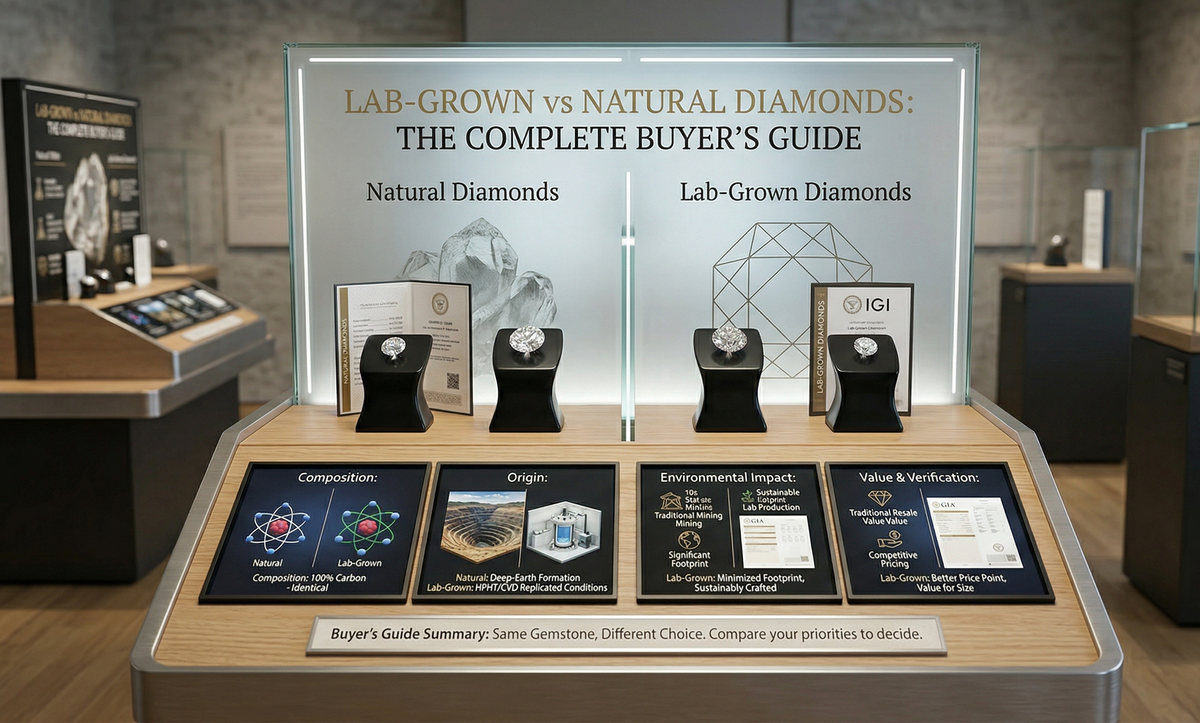
Whether grown by CVD's plasma chemistry or HPHT's brute force, every lab diamond is a genuine diamond by every scientific and gemmological measure. New to the topic? Start with what are lab-grown diamonds? or compare them in our lab-grown vs natural guide.
Want to see an IGI-certified CVD diamond up close? Book a visit to our studio in Somajiguda, Hyderabad.