Lab-Grown vs Natural Diamonds: Differences, Price and Which to Buy
Written by the SIYARI studio team in Hyderabad. Updated October 2026.
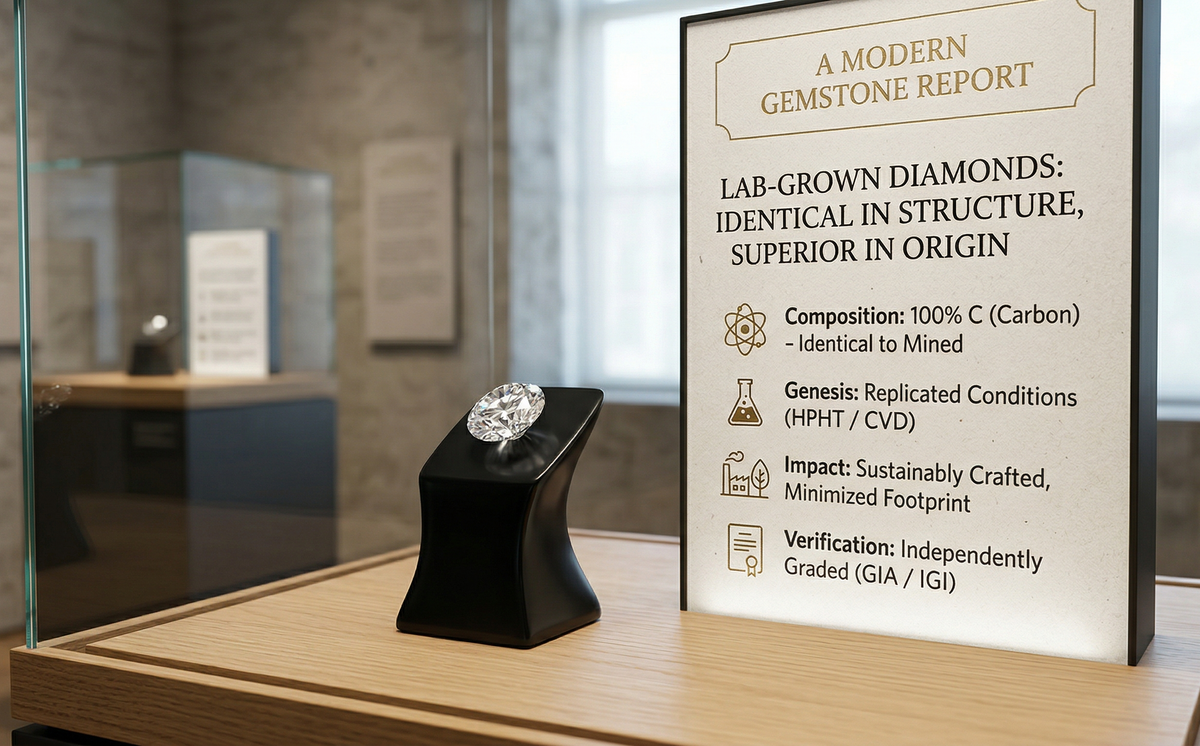
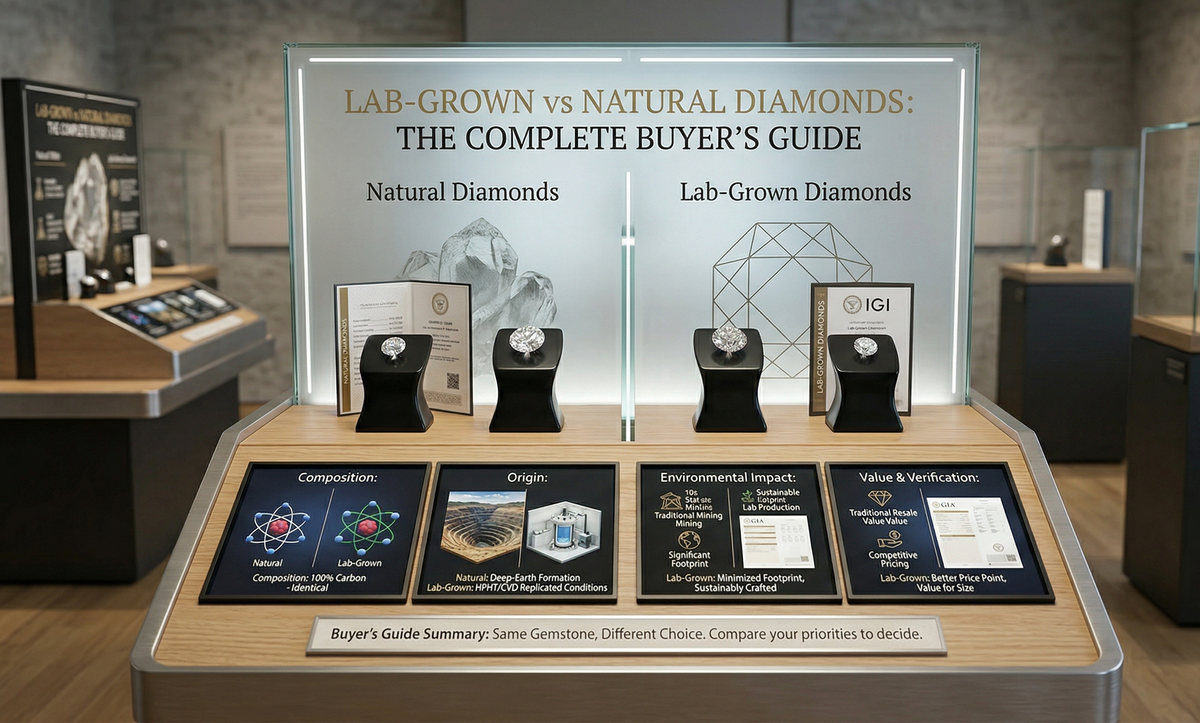
Same stone, different birthplace. A lab-grown diamond and a mined one are both pure carbon, both a 10 on the hardness scale, and both throw exactly the same sparkle. What changes is where they came from, and that changes the price far more than anything you'll ever see on your hand.
If you only read one part
- Nobody can tell them apart by eye, not even a jeweller with a loupe.
- Lab-grown costs a fraction of natural for the same colour and clarity, so your budget buys a bigger or cleaner stone.
- Natural diamonds resell better on the open market. With lab-grown, your jeweller's buyback policy is what protects you.
- Whichever you choose, buy it with an independent certificate you can check online.
Most people who walk into our studio have already half-decided, and then they see the two side by side and start asking better questions. So here's everything we usually end up explaining over a cup of chai, in one place.
Side by side
| Lab-grown | Natural | |
|---|---|---|
| Material | Pure carbon crystal | Pure carbon crystal |
| Hardness | 10 on the Mohs scale | 10 on the Mohs scale |
| Sparkle | Identical | Identical |
| Diamond tester | Reads diamond | Reads diamond |
| Made | Grown in weeks, by CVD or HPHT | Formed over billions of years, then mined |
| Price, same grades | A fraction of natural | Much higher |
| Usual certificate | IGI, marked "Laboratory Grown" | GIA or IGI |
| Open-market resale | Weaker | Stronger, especially for big stones |
How each one is made
Natural diamonds formed deep inside the earth under huge heat and pressure, and were carried up by ancient volcanic eruptions. They're mined, sorted, cut and polished.
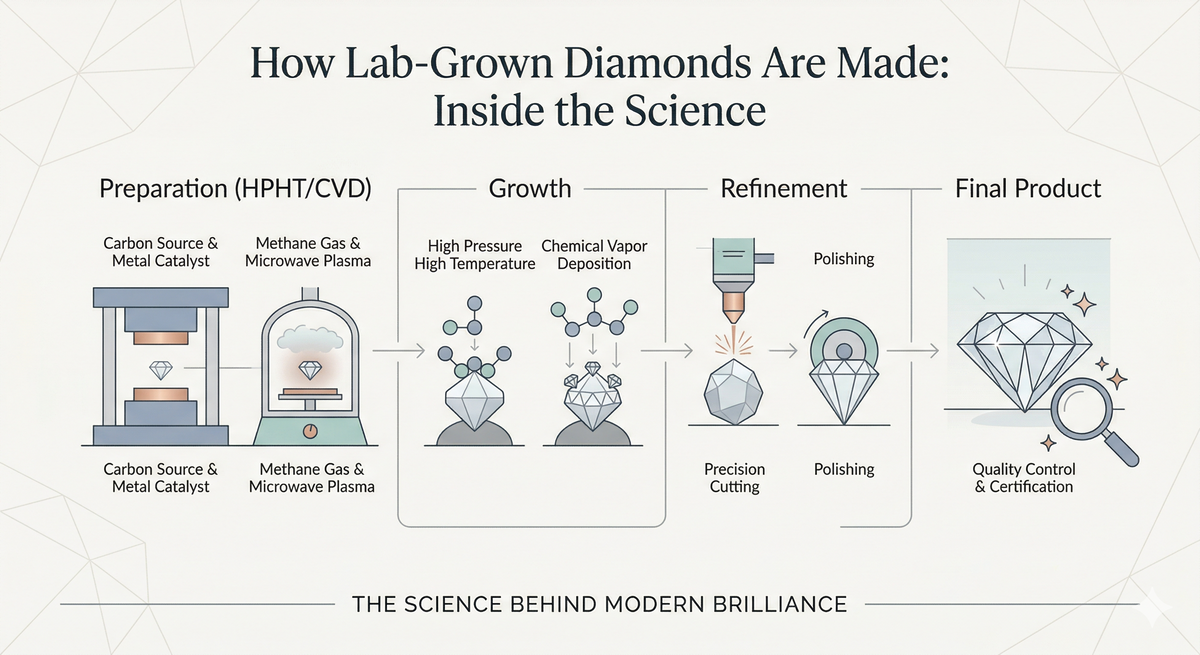
Lab-grown diamonds start from a thin slice of real diamond, called a seed, and grow on it atom by atom. There are two ways to do it.
CVD vs HPHT, in plain words
CVD (chemical vapour deposition) heats a carbon-rich gas into a glowing plasma inside a vacuum chamber. Carbon settles on the seed layer by layer, a bit like frost building on a window. Many CVD stones get a gentle heat treatment afterwards to improve their colour, and the certificate says so.
HPHT (high pressure, high temperature) does what the earth does, only faster: the seed sits in carbon and molten metal and is squeezed under enormous pressure and heat.
Neither is better. A CVD and an HPHT diamond with the same grades look the same, so judge the stone by its certificate, not its method. Every SIYARI diamond is CVD-grown. If you love the science, we wrote a whole piece on how lab-grown diamonds are made.

The price gap is the real story
A good-quality 1 carat natural diamond in India often costs ₹2 to 6 lakh for the stone alone. Our 1 carat lab-grown ring, with an E colour, VVS clarity, IGI-certified diamond, starts at ₹24,999 in silver and ₹42,021 in 14K gold.
That gap is the whole reason lab-grown has taken off. You can spend less, or spend the same and go bigger, whiter or cleaner. We break the numbers down properly in 1 carat diamond price in India and our carat-wise price guide.
Can anyone tell them apart?
Not by looking. Not with a regular diamond tester either, which beeps "diamond" for both. Only specialised lab machines, which read tiny differences in how the crystal grew, can tell. That's why the certificate and the tiny report number laser-written on the stone's edge matter so much. Here's how to check if a diamond is real.
What the certificate should say
Both kinds are graded on the same 4Cs: cut, colour, clarity and carat. For lab-grown stones, IGI is the lab most people use, and it gives full colour and clarity grades. GIA, the big name for natural diamonds, switched in 2025 to describing lab-grown stones only as "Premium" or "Standard". Either way, insist on a report you can verify online. We compare the two in IGI vs GIA.
Resale: the honest bit
This is where they really differ. Big, high-quality natural diamonds have historically held their value better, partly because they're rare. Lab-grown prices have been falling as the technology improves, so there isn't much of an open resale market for them.
So with lab-grown, the question to ask is what your jeweller will give you back. SIYARI offers an 80% buyback guarantee, and our buyback and exchange policy has the fine print. More on this in do lab-grown diamonds hold value?
Ethics and the planet
Mining supports a lot of jobs, but it also digs up land and, in some places, has been tied to poor working conditions. Lab-grown diamonds involve no mining and no conflict risk. They do use a lot of electricity to grow, so where that power comes from matters too. We go deeper in how lab diamonds reduce environmental impact.
So which one is for you?
Go natural if the idea of a stone that's billions of years old means something to you, or if you're thinking about resale decades from now.
Go lab-grown if you want the most diamond for your money, a whiter and cleaner stone than your budget would otherwise allow, and nothing mined. For most of the couples we meet, that's the deciding point.


Starting prices are for the lowest metal option. Gold prices are on each product page.
Questions we get asked
Are lab-grown diamonds real diamonds?
Yes. Same chemistry, same crystal, same hardness. Only the origin is different. We bust the common myths in are lab-grown diamonds real?
Can a jeweller tell a lab-grown diamond from a natural one?
Not by eye or with a normal tester. It takes specialised lab equipment, which is why the certificate states the origin.
Which is better, CVD or HPHT?
Neither. Both grow real diamonds. Compare stones by their certified colour, clarity and cut.
Is lab-grown the same as moissanite or cubic zirconia?
No. Those are different materials that only look like diamond. Here's how they compare.
Do lab-grown diamonds last forever?
Yes. They're as hard as natural diamonds and won't fade, cloud or lose their sparkle.
See the two side by side
Come to our Somajiguda studio and hold IGI-certified lab-grown diamonds in your hand. BIS-hallmarked gold or 925 silver, flat making charges, and an 80% buyback guarantee.
Book a studio visitOr message us on WhatsApp