How to Choose the Perfect Diamond Ring: A Beginner's Guide
Buying a diamond ring is one of the biggest purchases most of us make, whether it's for an engagement, an anniversary or just for you. It carries emotional weight and financial weight, and the jargon doesn't help.
This guide cuts through it. By the end you'll know exactly what to look at, what to ignore, and how to get the most ring for your money.
Start with what you're buying
Lab-grown diamonds are real diamonds, grown from carbon under controlled conditions. They have the same physical, chemical and optical properties as mined diamonds, so the same sparkle and the same hardness. The difference is price: you get far more diamond for your budget.
That's why most first-time buyers today start with lab-grown. If you want the full comparison, read our lab-grown vs natural diamonds buyer's guide.
The 4Cs, explained simply
Cut decides how well the diamond plays with light. It matters more than anything else for sparkle. Always prioritise an Excellent or Ideal cut.
Colour runs from D (completely colourless) down the alphabet to slightly yellow. With mined diamonds, people often settle for G–H to save money. With lab-grown, colourless grades like E and F are affordable, so there's little reason to compromise.
Clarity measures tiny internal marks called inclusions. VS grades look clean to the naked eye; VVS grades are cleaner still. Again, lab-grown pricing puts VVS within reach for most budgets.
Carat is weight, which mostly translates to size. Lab-grown lets you go bigger for the same money, but don't chase carat at the expense of cut.
At SIYARI we only use IGI-certified E/F colour, VVS clarity diamonds, so the top end of the 4Cs is the starting point.
Set a realistic budget
Forget the old "three months' salary" rule. Decide what you're comfortable spending, then work backwards. Lab-grown diamonds typically cost a fraction of a comparable mined stone, which means you can:
- Get a higher colour and clarity grade
- Go for a larger centre stone
- Put money towards a custom design instead of an off-the-shelf one
Ask for the price broken into diamond, gold and making charges. If a jeweller won't show you that split, walk away. Our carat-wise price guide shows what to expect in Hyderabad.
Pick a shape that suits the wearer
- Round: the most sparkle, the classic choice
- Oval: looks bigger for its weight and lengthens the finger
- Princess: square, modern and sharp
- Cushion: soft, rounded corners with a vintage feel
- Emerald: long, clean lines and a mirror-like look
Not sure? We go deeper in best diamond shapes for engagement rings.
Choose the setting
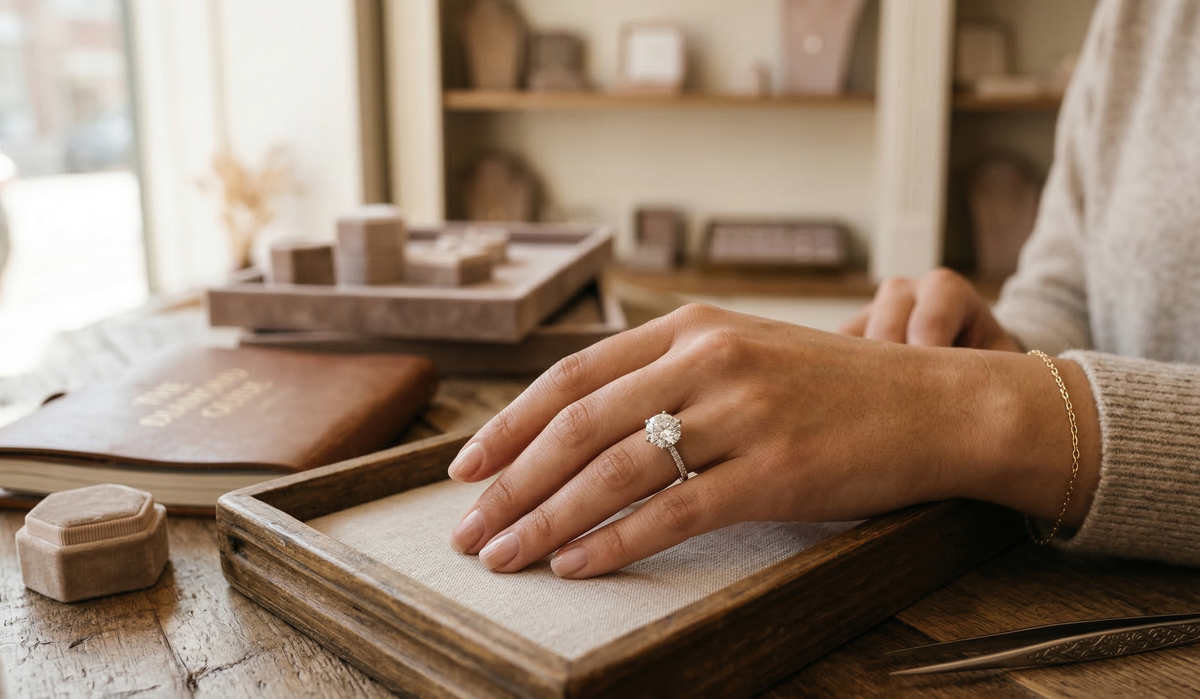
- Solitaire: one stone, clean and simple
- Halo: a ring of small diamonds that makes the centre look larger
- Three-stone: past, present and future
- Pavé: small diamonds set along the band for extra sparkle
Also think about the band itself. We compare open and closed bands and yellow, white and rose gold in separate guides.
Think about daily life
If the ring will be worn every day, go for a secure setting with the stone sitting lower, and avoid very thin bands. Diamonds are the hardest natural material, but prongs and bands still take knocks.
Check these before you pay
- Certificate: an IGI or GIA report with a number you can verify online
- Laser inscription: the report number on the diamond's edge should match
- Hallmark: BIS hallmarking on the gold
- Buyback and exchange terms in writing
Every SIYARI ring comes with an IGI certificate, BIS-hallmarked gold, flat making charges and an 80% buyback guarantee.
The bottom line
A great diamond ring isn't about spending the most. It's about knowing what matters (cut first, then the certificate) and getting the most out of your budget. Want to see stones side by side? Book a visit to our studio in Somajiguda, Hyderabad, or browse our diamond rings.